
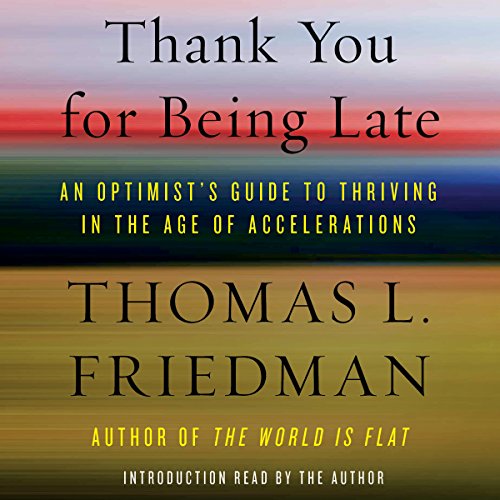
I’m reading a book called Thank You for Being Late by Thomas Friedman.
The book is rich with insights into the speed of change in today’s world. He notes that when changes were introduced back in the days of our parents and grandparents, it could take generations before the changes were incorporated into everyday life.
Now, changes can be introduced and absorbed in four or five years.
Examples abound. The smartphone is just ten years old, and we’re already on a fourth-generation network designed around increased data needs. It has moved from a fad to most people having them in their pockets at all times.
The smartphone changed how we listen to music, buy products, do our banking, take in our entertainment, and spend our time–all since 2007.
Friedman says that with the way things move so quickly, we have two choices: Be change-friendly and oriented, or spend the rest of your life off-balance and reactive as each wave of change comes your way.
He explains the concept of “dynamic stability.” It’s like riding a bike. You can’t balance a bike easily if you aren’t moving on it.
He suggests we move into change the same way. Do it while in motion and maintain your balance while moving. Otherwise, change as you pedal. Learn to do it as you are moving. With speed and agility.
As I read about “dynamic stability,” it resonated. We may wish change would slow down, but it isn’t going to.
We may want to ease into things, but that’s not how it works. Easing into things may cause you to miss them altogether.
Does your pace of change need an adjustment? “Dynamic stability” might be the thought process you need.
Resisting change seems to be a flawed mindset. Moving ahead and remaining alert to change is the way to survive.
𝗘𝗠𝗕𝗥𝗔𝗖𝗜𝗡𝗚 𝗕𝗔𝗗 𝗡𝗘𝗪𝗦: 𝗧𝗛𝗘 𝗣𝗔𝗧𝗛 𝗧𝗢 𝗖𝗢𝗨𝗥𝗔𝗚𝗘 𝗔𝗡𝗗 𝗧𝗘𝗔𝗠𝗪𝗢𝗥𝗞
If you ever watched the classic movie The Godfather, you might remember this quote: “If your car could take me to the airport, Mr. Corleone is a man who ins...
𝗗𝗘𝗙𝗜𝗡𝗘 𝗬𝗢𝗨𝗥𝗦𝗘𝗟𝗙 𝗕𝗬 𝗪𝗛𝗔𝗧 𝗬𝗢𝗨 𝗟𝗢𝗩𝗘
“Define yourself by what you love.” – Tim Minchin
I recently watched a commencement address by Australian comedian Tim Minchin at the University of Western Australia, where he shared nine unc...
𝗢𝗩𝗘𝗥𝗖𝗢𝗠𝗜𝗡𝗚 𝗔𝗗𝗩𝗘𝗥𝗦𝗜𝗧𝗬: 𝗙𝗗𝗥'𝗦 𝗟𝗘𝗦𝗦𝗢𝗡𝗦 𝗜𝗡 𝗟𝗘𝗔𝗗𝗘𝗥𝗦𝗛𝗜𝗣
Franklin Roosevelt was stricken with polio when he was in his late 30s. He lost the use of his legs overnight, never to regain it.
Read more below.
𝗛𝗜𝗚𝗛 𝗖𝗛𝗔𝗥𝗔𝗖𝗧𝗘𝗥 𝗟𝗘𝗔𝗗𝗘𝗥𝗦𝗛𝗜𝗣: 𝗪𝗛𝗔𝗧 𝗬𝗢𝗨 𝗗𝗢 𝗖𝗢𝗨𝗡𝗧𝗦
I listened to a discussion on the importance of high-character leadership to a company’s success and learned some interesting insights. Read more below.
#Leadership #...