
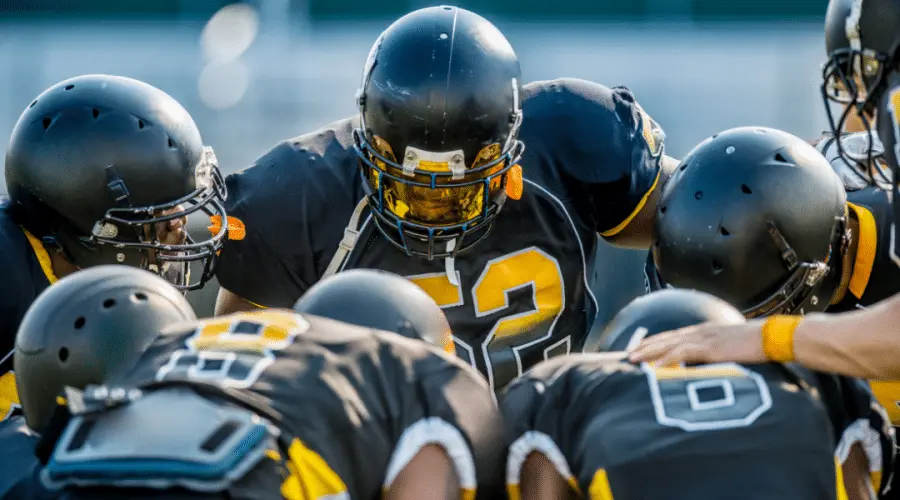
As you watch football this weekend, pay attention to how many teams are running the “no-huddle” offense. In college, powerhouses like Oregon or Texas A&M have mastered it. In the NFL, some of the most explosive offenses—like Kansas City, Miami, or Philadelphia—use it to dominate.
Just over a decade ago, the “no-huddle” was a novelty. Fast forward to today, and it’s a staple. In the current NFL season, nearly 20% of plays are run without a huddle. That’s a significant evolution for a game where tradition often reigns supreme.
The goal of the “no-huddle” remains simple but effective: eliminate unnecessary delays between snaps. Teams using it prioritize conditioning and precision to maintain an intense pace, tire out defenses, and limit substitutions. To combat this, defenses have had to get creative, adjusting strategies and emphasizing speed.
Receivers hustle the ball to officials to speed up resets. Offenses sprint to the line, executing plays called with a single word or signal. The entire approach prioritizes efficiency—no wasted time, no wasted motion. It’s all about maximizing one of football’s most precious resources: time.
This philosophy isn’t unique to football. We once analyzed sawmills to see how efficiently time was spent. How much time was a saw actually cutting wood? The findings were surprising: just 50% of the time. The other half was lost to changeovers, moving materials, unplanned breaks, and inefficiencies.
Much like the “no-huddle” offense, our study raised critical questions:
– Why do we slow down when we could move faster?
– Why wait for someone else to catch up when we can be prepared ahead of time?
– What systems or habits can we improve to cut wasted time?
The “no-huddle” offense forces teams to rethink and streamline their processes. Why jog when you can sprint? Why huddle when plays can be called instantly? Why overcomplicate signals or preparation when simplicity could give you the edge?
It’s a reminder that in any field—sports, business, or life—the best teams and individuals push for efficiency, preparedness, and speed. They maximize every opportunity and find ways to stay ahead of the game.
What does “lean” look like today? Watch the “no-huddle” offense in action, and you’ll see.
-Howe Q. Wallace Jr
𝗘𝗠𝗕𝗥𝗔𝗖𝗜𝗡𝗚 𝗕𝗔𝗗 𝗡𝗘𝗪𝗦: 𝗧𝗛𝗘 𝗣𝗔𝗧𝗛 𝗧𝗢 𝗖𝗢𝗨𝗥𝗔𝗚𝗘 𝗔𝗡𝗗 𝗧𝗘𝗔𝗠𝗪𝗢𝗥𝗞
If you ever watched the classic movie The Godfather, you might remember this quote: “If your car could take me to the airport, Mr. Corleone is a man who ins...
𝗗𝗘𝗙𝗜𝗡𝗘 𝗬𝗢𝗨𝗥𝗦𝗘𝗟𝗙 𝗕𝗬 𝗪𝗛𝗔𝗧 𝗬𝗢𝗨 𝗟𝗢𝗩𝗘
“Define yourself by what you love.” – Tim Minchin
I recently watched a commencement address by Australian comedian Tim Minchin at the University of Western Australia, where he shared nine unc...
𝗢𝗩𝗘𝗥𝗖𝗢𝗠𝗜𝗡𝗚 𝗔𝗗𝗩𝗘𝗥𝗦𝗜𝗧𝗬: 𝗙𝗗𝗥'𝗦 𝗟𝗘𝗦𝗦𝗢𝗡𝗦 𝗜𝗡 𝗟𝗘𝗔𝗗𝗘𝗥𝗦𝗛𝗜𝗣
Franklin Roosevelt was stricken with polio when he was in his late 30s. He lost the use of his legs overnight, never to regain it.
Read more below.
𝗛𝗜𝗚𝗛 𝗖𝗛𝗔𝗥𝗔𝗖𝗧𝗘𝗥 𝗟𝗘𝗔𝗗𝗘𝗥𝗦𝗛𝗜𝗣: 𝗪𝗛𝗔𝗧 𝗬𝗢𝗨 𝗗𝗢 𝗖𝗢𝗨𝗡𝗧𝗦
I listened to a discussion on the importance of high-character leadership to a company’s success and learned some interesting insights. Read more below.
#Leadership #...